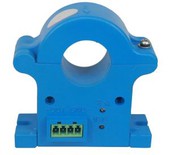
The fluxgate principle is an electromagnetic sensor principle based on the principle of magnetic induction. It detects the position, speed and direction of a target object by detecting the changes that occur when passing through a magnetic field.
A fluxgate sensor consists of five main components: the magnet, its outer frame, the fluxgate, the sensor, and the processor. Magnets are responsible for generating a stable magnetic field. Its outer frame protects and secures the magnet and sensor. A fluxgate is used to magnetically link the magnetic flow between the sensor and the target object. The sensor is the part that actually detects the change in current in the fluxgate. The processor is responsible for receiving, processing, and converting the sensor output into a usable signal.
The working principle of the fluxgate sensor can be explained by Faraday's law of electromagnetic induction. According to this principle, when a conductor (in this case a flux gate) is passed through by a magnetic field, an induced current is produced in the conductor. The magnitude and direction of this induced current depend on the relative motion between the magnetically induced conductor and the magnetic field.
When a target object approaches the fluxgate, it interferes with the magnetic field. This interference will cause the flux linkage in the flux gate to change, causing changes in the induced current. The sensor will detect this change in current and convert it into a voltage or digital signal.
Fluxgate sensors offer many advantages. First, they are insensitive to changes in external environmental conditions such as material color, temperature and lighting. This makes them suitable for different application environments. Secondly, the fluxgate sensor has a fast response speed and can quickly detect changes in target objects in real time. In addition, they have high resolution and sensitivity and can detect very small changes. Finally, the fluxgate sensor also has high anti-interference capabilities against external interference such as electromagnetic interference and vibration, thereby improving the stability and accuracy of the sensor.
However, fluxgate sensors also have some disadvantages. First, they have certain requirements on the shape and size of the target object. Specifically, the target object must be able to generate a magnetic field disturbance large enough for the sensor to detect it. Secondly, because fluxgate sensors need to generate a constant magnetic field, they require a certain amount of power consumption. This may become a problem in some low-power and long-life application scenarios. In addition, the working distance of fluxgate sensors is relatively short, generally a few millimeters to a few centimeters. This limits their use in some application scenarios.
In short, the fluxgate sensor is an electromagnetic sensor based on the principle of magnetic induction, used to detect the position, speed and direction of the target object. They have the advantages of being insensitive to external environmental conditions, fast response, high resolution and sensitivity, and strong anti-interference ability. However, they have certain requirements on the shape and size of the target object, require a certain amount of power consumption, and the working distance is relatively short.