

Current Sensor

WEIBO: Your Professional Current Sensor manufacturer!
The company's WB series electrical isolation transducers, first launched in 1989, have been awarded the title of Sichuan Famous Brand Product for the 10th and 11th consecutive sessions. Boasting strong R&D and manufacturing capabilities, the company has secured more than 70 national patents and over 20 technical achievements to date.
-
![30A-400A Input AC Current Sensor(400A Max)]() WBI414F23 converts AC input current into output signal DC 4-20mA. It has adopted electromagnetic isolation principle for real time measurement of AC current from electric net or electric circuit.view more
WBI414F23 converts AC input current into output signal DC 4-20mA. It has adopted electromagnetic isolation principle for real time measurement of AC current from electric net or electric circuit.view more -
![True RMS Current Transducer Analog Output]() WBI417S91 is suitable for current isolation measurement of sine wave, sawtooth wave and non-sine wave (rectangular wave, triangular wave and other large distortion waveform).view more
WBI417S91 is suitable for current isolation measurement of sine wave, sawtooth wave and non-sine wave (rectangular wave, triangular wave and other large distortion waveform).view more -
![50-500A Input Current Transducer Arduino]() WBI414F23 converts AC input current into output signal DC 4-20mA. It has adopted electromagnetic isolation principle for real time measurement of AC current from electric net or electric circuit.view more
WBI414F23 converts AC input current into output signal DC 4-20mA. It has adopted electromagnetic isolation principle for real time measurement of AC current from electric net or electric circuit.view more -
![Current Signal Conditioner 0 → 500 A Input, 4 → 20 MA Output]() WBI414F43 converts AC input current into output signal DC 4-20mA. It has adopted electromagnetic isolation principle for real time measurement of AC current from electric net or electric circuit.view more
WBI414F43 converts AC input current into output signal DC 4-20mA. It has adopted electromagnetic isolation principle for real time measurement of AC current from electric net or electric circuit.view more -
![0 to 5V Output Current Transmitter]() WBI412N21 adopts the special isolation module for real time measurement of AC current from power grid or circuit. It is converted to 0 to 5V or 10V output, and the characteristics of high precision,view more
WBI412N21 adopts the special isolation module for real time measurement of AC current from power grid or circuit. It is converted to 0 to 5V or 10V output, and the characteristics of high precision,view more -
![Current Transducer with 0-5VDC Output]() WBI342U01-S converts DC input current into a load independent output signal DC 0-5V, or 0-10V. It has adopted electromagnetic isolation principle for real time measurement of DC current from electricview more
WBI342U01-S converts DC input current into a load independent output signal DC 0-5V, or 0-10V. It has adopted electromagnetic isolation principle for real time measurement of DC current from electricview more -
![0 to 5A AC Current Transducer Analog Output]() This product uses a special isolation module to measure the AC current in the power grid and circuit in real time, and convert it into 0~5V, 0~10V or 1V~5V DC voltage (Uz) output; with highview more
This product uses a special isolation module to measure the AC current in the power grid and circuit in real time, and convert it into 0~5V, 0~10V or 1V~5V DC voltage (Uz) output; with highview more -
![AC Current Sensor Analog Output ]() WBI415S91 converts AC input current into a load independent output signal RMS 0-5V. It has adopted electromagnetic isolation principle for real time measurement of AC current from electric net orview more
WBI415S91 converts AC input current into a load independent output signal RMS 0-5V. It has adopted electromagnetic isolation principle for real time measurement of AC current from electric net orview more -
![4-20mA Din Rail Mount Signal Converter]() This product uses linear photoelectric isolation technology to isolate and transmit 4mA to 20mA DC current signals. The input, two output and auxiliary power supply of this product are electricallyview more
This product uses linear photoelectric isolation technology to isolate and transmit 4mA to 20mA DC current signals. The input, two output and auxiliary power supply of this product are electricallyview more -
![50A DC Current Transducer Anti-interference]() WBI411N95 uses a special isolation module to measure the AC current in the grid and circuit in real time and transform it into the DC voltage (Uz) output of the standard vertebra; with highview more
WBI411N95 uses a special isolation module to measure the AC current in the grid and circuit in real time and transform it into the DC voltage (Uz) output of the standard vertebra; with highview more -
![4 to 20mA Output Current Transducer]() The WBI414N21 utilizes a special isolation module for the real-time measurement of AC current from a power grid or circuit. It converts the measured signal into a 0mA~20mA or 4mA~20mA DC current (Iz)view more
The WBI414N21 utilizes a special isolation module for the real-time measurement of AC current from a power grid or circuit. It converts the measured signal into a 0mA~20mA or 4mA~20mA DC current (Iz)view more -
![Current Transducer for Monitoring 0-10V Output]() WBI414F43 converts AC input current into output signal DC 4-20mA. It has adopted electromagnetic isolation principle for real time measurement of AC current from electric net or electric circuit.view more
WBI414F43 converts AC input current into output signal DC 4-20mA. It has adopted electromagnetic isolation principle for real time measurement of AC current from electric net or electric circuit.view more


Sensor Product
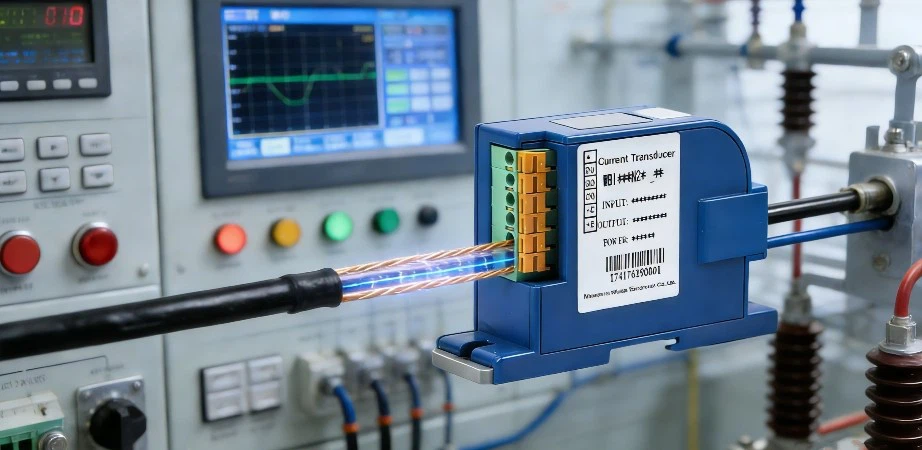
A current sensor is a device that detects and measures the electric current (AC or DC) in a conductor and converts it into a proportional, readable signal—usually voltage or a digital output. It is essential for monitoring, controlling, and protecting electrical systems by providing feedback for motor control, battery management, and fault detection.
High Accuracy & Reliability
They deliver precise data for critical monitoring of motor torque, battery management, and industrial automation.
Real-Time Monitoring & Protection
They facilitate fast, instantaneous tracking of current changes and waveforms, allowing for instantaneous protection against overcurrent conditions.
Wide Dynamic Range
These devices can measure both very low and very high currents across a broad frequency band.
Versatility
They are suitable for various environments and can be miniaturized for applications like e-bikes, EVs, and consumer electronics.
CURRENT SENSOR TYPES

AC Current Sensor
Detects and converts alternating current signals into standard measurable outputs for AC circuit monitoring.
DC Current Sensor
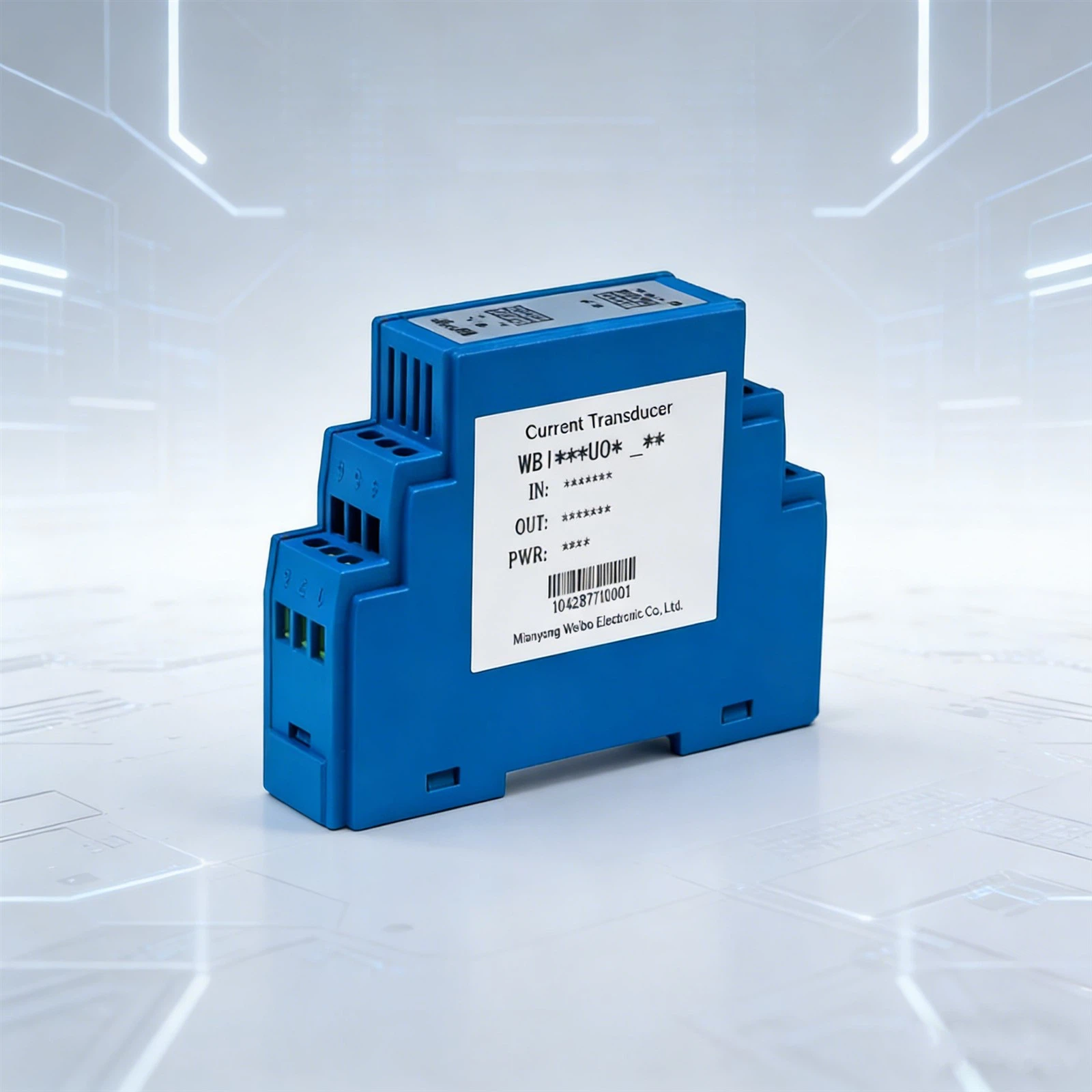
Precisely captures direct current values and outputs standard signals for DC loop current detection.

Leakage Current Sensor
Monitors abnormal leakage current in circuits and triggers protection for electrical safety monitoring.
Materials of AC/DC current sensors
Magnetic Core: Typically made of soft magnetic materials, such as nickel-iron alloys used in fluxgate sensors.
Conductive Material: Copper is used for internal wiring or windings, especially in Hall effect sensors and shunt resistors.
Sensing Element: Hall effect sensors use silicon to directly measure the magnetic field on the chip.
Packaging: The housing is typically made of molded plastic or PBT (polybutylene terephthalate), usually complying with the UL 94-V0 safety rating.
Process of current sensors
Design and Simulation
1
>>
Assembly and Packaging
2
>>
Triple Protection (Moisture, Corrosion, and Shock Resistance)
3
>>
Calibration and Labeling
4
>>
Testing and Aging
5
>>
Compliance and Quality Inspection
6
What you should know when use current sensors
Routine Visual Inspections:
Check for Physical Damage: Inspect housings for cracks, dents, or signs of wear.
Inspect Connections: Ensure wiring is secure, properly connected, and free from corrosion to prevent erratic readings.
Cleanliness: Remove accumulated dust, dirt, or debris with a soft, dry cloth.
Cleaning Procedures:
Gentle Cleaning: Avoid harsh abrasives or chemicals that can damage the sensor housing.
Solvents: For stubborn contamination, use appropriate cleaners such as spirit or, if permitted, mild detergents.
Calibration and Performance:
Annual Calibration: Calibrate the sensor at least once a year to maintain accuracy, as sensor readings can drift over time.
Verify Accuracy: Compare the transducer’s readings with a trusted, calibrated measurement device.
Operational & Environmental Care:
Temperature Monitoring: Ensure the sensor operates within recommended temperature ranges to prevent damage.
Thermal Shock Avoidance: Prevent rapid temperature changes; heat or cool the sensor slowly.
Proper Storage: Store in a cool, dry place, keeping protective caps on if applicable.
Safety Precautions:
Power Down: Always power off equipment before performing any maintenance or cleaning.
How To Cooperate With Us?
Send us the technical parameters
We kindly request that you provide us with detailed technical parameters of the product, including input, output and power supply.
Production
We start the process of manufacturing, including Assembly and Packaging, Triple Protection (Moisture, Corrosion, and Shock Resistance) , Calibration and Labeling, Testing and Aging.
Transportation and usage
The products will be shipped according to your demands and the products must be installed in a right way after you receive the products.
Our Factory





Frequently Asked Questions
Question 1: What is the measurement range and accuracy? Can it meet our actual working conditions?
Answer:Our standard AC/DC current sensors typically cover ranges from 10mA up to 2000A. For example, a common model like the WBI414 series measures AC/DC from 0 to 500A with a ±0.5% FS accuracy at 25°C. Overload capability is usually 1.2 to 2 times the nominal range for short durations. Accuracy is influenced by temperature drift (typically <0.02%/°C) and frequency response (DC to 20kHz for most Hall-effect sensors). To confirm suitability, we need details of your actual waveform, load type (sinusoidal, PWM, etc.), ambient temperature range, and required isolation voltage.
Question 2: Is the installation method compatible with our system?
Answer:We offer split-core (open/close type) and solid-core models. Split-core sensors allow hot installation without breaking the conductor, suitable for retrofitting; accuracy is typically ±1%. Solid-core (through-hole) sensors provide higher accuracy, typically ±0.5%. Mounting options include DIN rail, panel screw, or direct PCB mounting. Dimensions and drawings are available in the datasheet (e.g., standard 37.5mm width for DIN rail). Please confirm your panel cutout size, conductor diameter, and available space for a compatibility check.
Question 3: How does the output signal connect to our PLC/data acquisition device?
Answer:Standard output options include:
Analog: 0-5V, 0-10V, or 4-20mA outputs. Ensure your PLC input impedance matches (e.g., ≥10kΩ for voltage output, ≤500Ω burden for current output).
Digital: RS485 (Modbus RTU) or CAN interfaces, configurable via software.
We provide wiring diagrams and PC configuration tools free of charge. For analog outputs, a 3-wire connection (power, ground, signal) is standard. For digital outputs, typical daisy-chain or star topology is supported.
Question 4: Can it operate stably in harsh environments?
Answer:Standard industrial-grade sensors operate within -25°C to +85°C, with an extended range of -40°C to +105°C available. Temperature drift is typically <±0.05%/°C for high-precision models. Electromagnetic compatibility meets IEC/EN 61000-6-2 (immunity) and 61000-6-4 (emission) standards. Sensors are designed for use in industrial motor drives, renewable energy systems, and railway applications with strong EMI. For extreme conditions, we recommend conformal coating or IP67-rated encapsulated versions.
Question 5: What certifications, lifespan, and warranty do you offer?
Answer:The typical MTBF (Mean Time Between Failures) is >500,000 hours (calculated per MIL-HDBK-217F), with an operational lifespan of >10 years under rated conditions. We provide a standard 12-month warranty from shipment, covering manufacturing defects. Extended warranty up to 36 months is available for bulk contracts.
Question 6: Is the price competitive? Can you customize for bulk orders?
Answer:Our pricing is typically 20-40% lower than major EU/US brands (e.g., LEM, Allegro) while maintaining comparable performance, offering strong import substitution value. For bulk orders (>500 pcs), we provide tiered pricing discounts and support the following
customizations:
Measurement Range: Custom scaling (e.g., 0-750A).
Output: Modified voltage/current levels or custom digital protocols.
Mechanical: Modified housing, cable length, connector type, or branding.
Lead Time: Samples in 2-3 weeks, mass production in 6-8 weeks after confirmation.
We're professional current sensor suppliers in China, specialized in providing high quality products. We warmly welcome you to buy or wholesale bulk current sensor from our factory. For price consultation, contact us.