

Hey there! As a supplier of PCB Mounting AC Current Sensors, I often get asked if these sensors can be used in railway applications. Well, let's dive right into it and explore this topic.
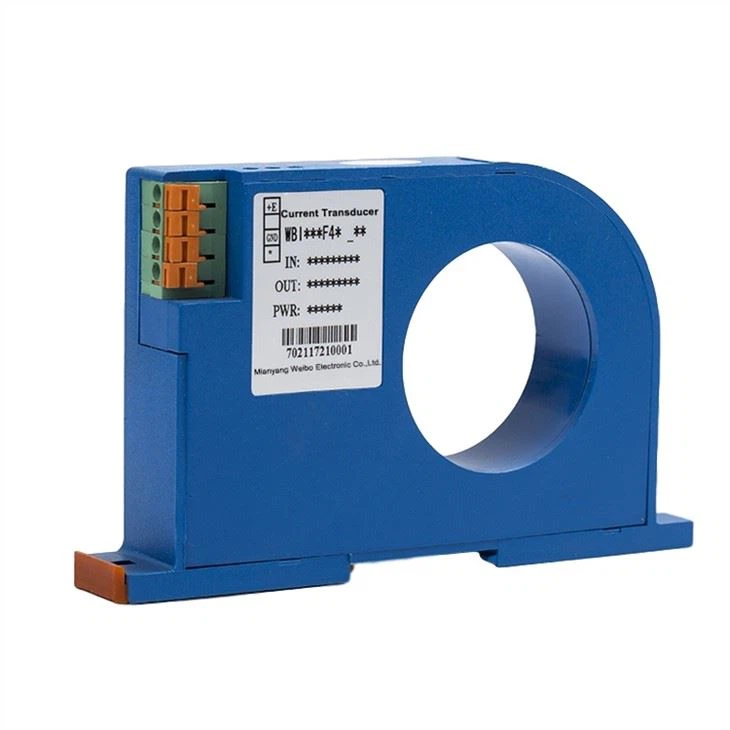

First off, what exactly is a PCB Mounting AC Current Sensor? It's a device that can measure alternating current (AC) and is designed to be mounted directly on a printed circuit board (PCB). These sensors are pretty handy because they can provide accurate current measurements in a compact and efficient way.
Now, let's talk about railway applications. Railways are a complex system that involves a lot of electrical components and equipment. From the trains themselves to the signaling systems and power distribution networks, there's a constant need to monitor and control electrical currents.
So, can a PCB Mounting AC Current Sensor be used in railway applications? The answer is a big yes! Here are some reasons why:
1. Compact Size
In railway applications, space is often at a premium. PCB Mounting AC Current Sensors are small and can be easily integrated into the existing electrical systems without taking up too much space. This is especially important in trains, where every inch of space counts.
2. High Accuracy
Accurate current measurement is crucial in railway applications. PCB Mounting AC Current Sensors can provide precise measurements, which helps in ensuring the safe and efficient operation of the railway system. For example, in the power distribution network, accurate current measurement can help in detecting any faults or abnormalities in the electrical system.
3. Reliability
Railway systems operate in harsh environments, including extreme temperatures, vibrations, and electromagnetic interference. PCB Mounting AC Current Sensors are designed to be robust and reliable, which makes them suitable for usage in these challenging conditions.
4. Cost-Effective
Compared to other types of current sensors, PCB Mounting AC Current Sensors are relatively cost-effective. This makes them a great choice for railway applications, where cost is always a consideration.
However, there are also some challenges that need to be addressed when using PCB Mounting AC Current Sensors in railway applications. For example, the sensors need to be able to withstand the high levels of electromagnetic interference (EMI) that are common in railway environments. To overcome this challenge, we offer Anti-jamming Current Sensor for Switching Power Supply, which is designed to minimize the effects of EMI.
Another challenge is the need for high accuracy and stability over a wide range of operating conditions. Our PCB Mount AC Current Sensor is designed to meet these requirements, providing accurate and reliable current measurements even in the most demanding railway applications.
In addition to these challenges, it's also important to ensure that the sensors are properly installed and calibrated. This requires a certain level of technical expertise, which is why we offer technical support to our customers.
Now, let's talk about some specific railway applications where PCB Mounting AC Current Sensors can be used:
1. Train Propulsion Systems
In train propulsion systems, PCB Mounting AC Current Sensors can be used to monitor the current flowing through the traction motors. This helps in ensuring that the motors are operating efficiently and safely.
2. Signaling Systems
In railway signaling systems, PCB Mounting AC Current Sensors can be used to monitor the current flowing through the signaling circuits. This helps in detecting any faults or abnormalities in the signaling system, which is crucial for the safe operation of the railway.
3. Power Distribution Networks
In railway power distribution networks, PCB Mounting AC Current Sensors can be used to monitor the current flowing through the power lines. This helps in ensuring that the power is being distributed evenly and efficiently.
To meet the specific requirements of railway applications, we also offer a Current Signal Conditioner 0 → 500 A Input, 4 → 20 MA Output. This signal conditioner can be used to convert the current signal from the sensor into a standard 4-20 mA output, which can be easily interfaced with other control systems.
In conclusion, PCB Mounting AC Current Sensors can definitely be used in railway applications. They offer a number of advantages, including compact size, high accuracy, reliability, and cost-effectiveness. However, it's important to address the challenges associated with using these sensors in railway environments, such as EMI and high accuracy requirements.
If you're interested in using our PCB Mounting AC Current Sensors in your railway applications, we'd love to hear from you. We can provide you with more information about our products and services, and help you choose the right sensor for your specific needs. Just reach out to us, and let's start a conversation about how we can work together to make your railway system safer and more efficient.
References
- Various industry standards and guidelines for railway electrical systems.
- Technical documentation provided by the sensor manufacturer.