

Hey there! As a supplier of 4 To 20mA Output AC Current Sensors, I often get asked if these sensors can be used in elevator control systems. It's a valid question, and I'm here to break it down for you.
Firstly, let's understand what a 4 To 20mA Output AC Current Sensor does. This type of sensor is designed to measure alternating current (AC) and convert it into a proportional 4 to 20mA current signal. The 4mA typically represents the minimum current measurement, and 20mA represents the maximum. This standard current signal is widely used in industrial control systems because it's less susceptible to electrical noise and can be transmitted over long distances without significant loss.
Now, let's talk about elevator control systems. Elevators are complex machines that require precise control and monitoring to ensure the safety and comfort of passengers. They rely on a variety of sensors and control devices to operate smoothly.
Current sensors play a crucial role in elevator control systems. They are used to monitor the current drawn by the elevator motor, which is directly related to the load on the elevator. By accurately measuring the current, the control system can determine if the elevator is overloaded, adjust the speed and torque of the motor accordingly, and detect any potential faults in the electrical system.
So, can a 4 To 20mA Output AC Current Sensor be used in elevator control systems? The short answer is yes. Here's why.
Accuracy and Reliability
One of the key advantages of a 4 To 20mA Output AC Current Sensor is its high accuracy. Elevator control systems require precise current measurements to ensure safe and efficient operation. Our sensors are designed to provide accurate readings even in harsh electrical environments, with low error rates and high stability over time. This reliability is essential for preventing malfunctions and ensuring the long - term performance of the elevator.
Compatibility with Control Systems
Most modern elevator control systems are designed to accept 4 to 20mA current signals. This makes our sensors a perfect fit for these systems. The control system can easily interpret the 4 to 20mA signal and use it to make decisions about the operation of the elevator. For example, if the current exceeds a certain threshold, the control system can trigger an alarm or take corrective action to prevent damage to the motor.
Long - Distance Transmission
In large buildings, the elevator control room may be located far away from the elevator motor. The 4 to 20mA current signal can be transmitted over long distances without significant degradation. This means that our sensors can be installed close to the motor, and the signal can be sent reliably to the control room for monitoring and analysis.
Let's take a look at some of the products we offer that could be used in elevator control systems.
The Current Signal Conditioner 0 → 500 A Input, 4 → 20 MA Output is a great option for applications where you need to measure a wide range of currents. It can handle input currents from 0 to 500A and convert them into a 4 to 20mA output signal. This flexibility makes it suitable for different types of elevator motors.
If you're looking for a sensor with a different output format, we also have the 0 - 5V Output AC Current Sensor module. While it doesn't have the 4 to 20mA output, it can still be used in elevator control systems where a voltage - based signal is preferred.
For higher - current applications, our AC Current Transducer 500A is a powerful choice. It can accurately measure currents up to 500A and provide a reliable 4 to 20mA output.
The 30A - 400A Input AC Current Transducer is designed for applications where the current ranges from 30A to 400A. It offers high accuracy and reliability in this specific current range, making it ideal for many elevator motor applications.
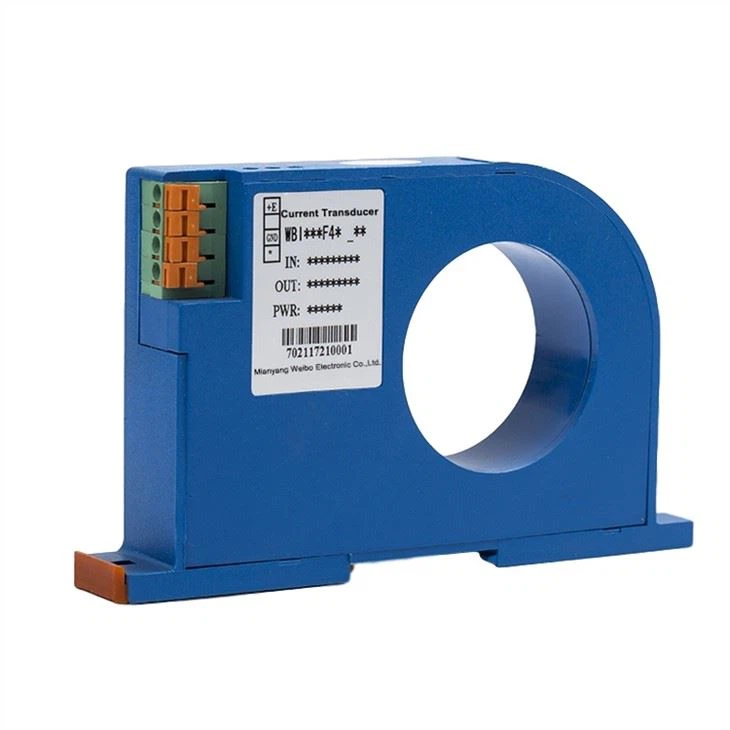

Last but not least, the 400A AC Current Transducer 4 - 20mA Output is specifically optimized for measuring 400A currents and converting them into a standard 4 to 20mA signal.
However, as with any technology, there are also some things to consider when using a 4 To 20mA Output AC Current Sensor in elevator control systems.
Electrical Noise
Elevator motors can generate significant electrical noise, which can interfere with the current sensor's measurements. To mitigate this, our sensors are equipped with advanced filtering and shielding techniques. But it's still important to ensure proper installation and grounding to minimize the effects of electrical noise.
Calibration
Regular calibration is necessary to maintain the accuracy of the current sensor. Over time, factors such as temperature changes and component aging can affect the sensor's performance. We recommend calibrating the sensors at least once a year to ensure reliable operation.
Safety Considerations
Elevator control systems are safety - critical applications. When installing and using our current sensors, it's important to follow all relevant safety standards and guidelines. This includes proper insulation, protection against overcurrent, and ensuring that the sensors are installed in a way that they won't be damaged during normal elevator operation.
In conclusion, a 4 To 20mA Output AC Current Sensor can be a valuable addition to elevator control systems. It offers high accuracy, compatibility with control systems, and the ability to transmit signals over long distances. Our range of products provides options to suit different current measurement requirements.
If you're in the elevator industry and are looking for a reliable current sensor for your control systems, we'd love to talk to you. Whether you need more information about our products, want to discuss your specific application requirements, or are ready to start a purchase, don't hesitate to get in touch. We're here to help you find the best solution for your elevator control needs.
References
- Industrial Control System Handbook, Various authors
- Elevator Safety and Control Standards, International elevator industry organizations